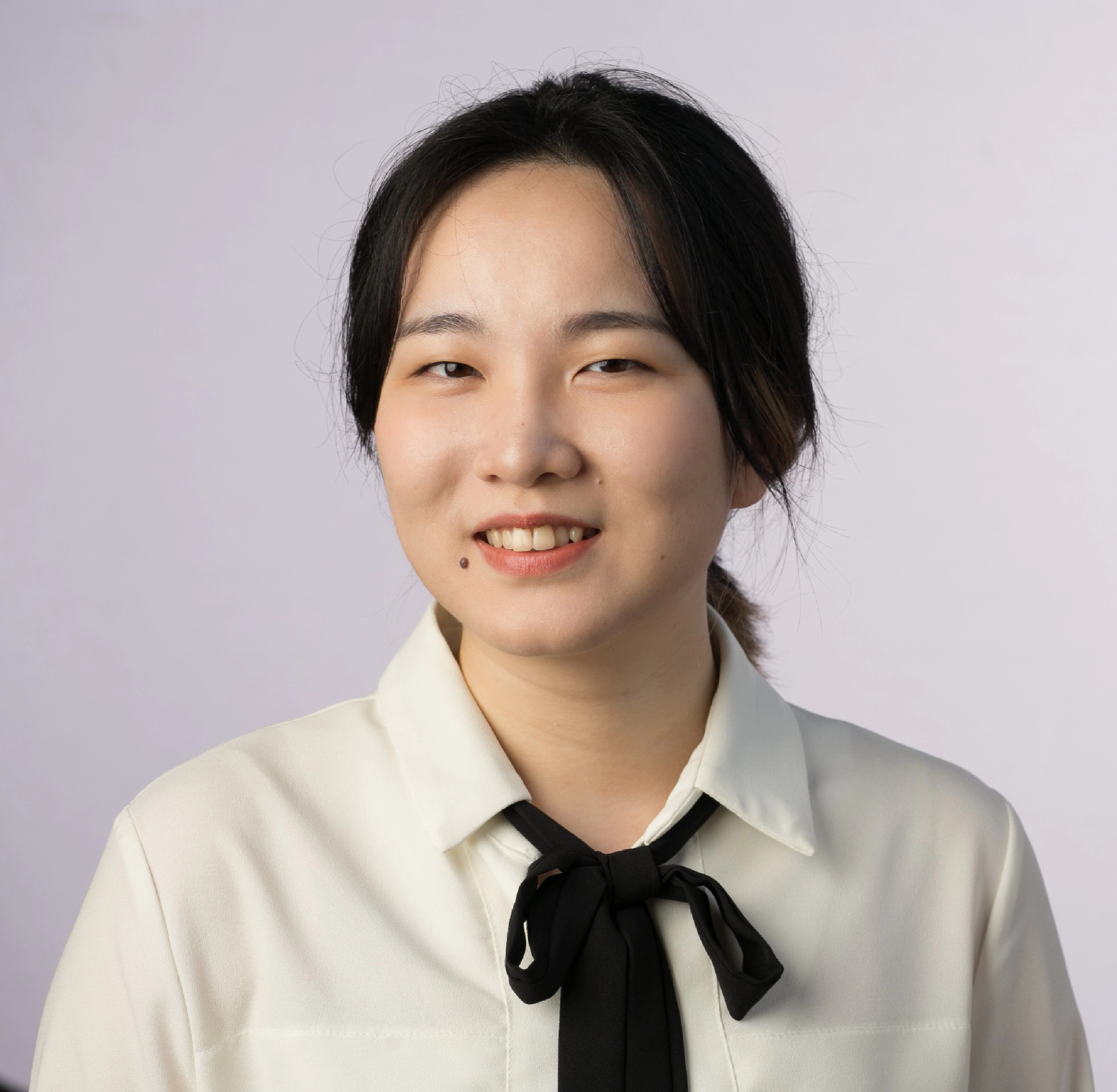
My name is Ga Eun Cho (조가은, pronounced: GAH-un JOH). I am a PhD candidate in Political Science at Johns Hopkins University and a Graduate Fellow at the Chloe Center for the Critical Study of Racism, Immigration, and Colonialism. I am serving as the Associate Editor of the Cambridge Politics and Society in East Asia series. This year, I am completing my dissertation fieldwork as a Junior Fellow at the International Center for Korean Studies in the Kyujanggak Institute at Seoul National University.
My research interests span Political Economy of Development, Migration and Security, and East Asian Politics and Society. Across these fields, I demonstrate that development has been conceived in a way that justifies and even necessitates mobility and exclusion. Specifically, I am interested in the interconnections between state goals, such as economic development, postcolonial reconstruction, modernization, and Cold War survival, and boundary-making strategies, including nation-building, migration, and citizenship policies. My reserach intervenes in key debates across multiple fields: In Political Economy, I ask how latecomer states pursue economic development through population engineering; in International Relations, I ask whether migrations and diasporas are beneficial or to state’s economies, politics, and societies; and in East Asian Studies, I explore how to explain South Korea’s political transition and economic development in context of post-colonialism and Cold War. I approach these questions from a transnational historical perspective, highlighting the movements, connections, and influence of diverse actors across time and space.
My dissertation, Rethinking Migration and Development: The Politics of Emigration in South Korea examines state-led emigration and diaspora engagement policies as strategies of economic development. Migration was central to the state’s vision of progress as a mechanism for defining and policing national membership. Drawing on archival and interview-based fieldwork, I show how emigration policies were part of broader population engineering strategies, such as sterilization programs and anti-communist purges during the Cold War. I argue that South Korea’s mass emigration policies, initiated in the early 1960s, were also a mechanism for defining the “modern” Korean population by excluding certain groups deemed undesirable. I analyze this through a comparison of three state-led emigration policies, each targeting different populations and destinations: transnational adoption, temporary labor migration to Germany, and agricultural migration/family relocation to South America. In doing so, my work shifts attention away from the dominant focus in the on labor migration from the Global South to the Global North, to diverse patterns and contexts.
Existing scholarship on migration and development emphasizes remittances and other tangible economic gains from sending citizens abroad. In contrast, I argue that sociopolitical exclusion lies at the heart of development itself. By reconceptualizing development as a process of exclusion rather than solely economic growth, I contribute to debates in comparative political economy, migration and citizenship studies, and the study of latecomer economic development. This framework recasts exclusionary policies, such as displacement, emigration, and revocation of citizenship, from anomalies or side effects of development into its central facets. These findings have broader historical and comparative implications on how different states engage with, restrict, or encourage migration, even in the absense of immediate utilitarian benefits. Why push out major sources of low-wage labor by enforcing strict measures against undocumented immigrants? Why repress political dissidents abroad despite risk of sanctions? I argue that such policies are better understood as part of a state’s effort to control the boundaries of belonging in service of broader state goals such as economic development or regime stability.
I adopt a transnational historical approach, using a mix of qualitative methods including archival, fieldwork and interview research in English, Korean, and mixed Chinese-Korean mixed script. My fieldwork has been supported by competitive grants I have won from the Kyujanggak Institute at Seoul National University, as well as from the East Asian Studies program, the Chloe Center for the Critical Study of Racism, Immigration, and Colonialism, and the Political Science Department at Johns Hopkins University.
I obtained my MA in International Relations from Seoul National University and a BA in Asian Studies and Economics from Yonsei University.
Development in the Global South, Developmental State in East Asia, Migration, Population, and Development.
International Migration, Disapora Politics, Borders, Transnational Repression, Passport and Visa Regimes.
US-East Asia Relations, Korean Peninsula, Political and Social Transformation, Transitional Justice.
My pedagogy centers on cultivating students’ ability to think critically and independently while tracing the sources of knowledge and the interconnections between different geographies and histories. I design courses that train students as critical consumers and responsible producers of knowledge, challenging them to interrogate how data and information are created, who produces them, and for what purposes.
My primary goals are to help students develop critical thinking skills, understand how to analyze complex political phenomena, and recognize the interconnections between different regions and time periods. I aim to foster intellectual curiosity and equip students with analytical tools they can apply beyond the classroom, whether in future academic work, professional careers, or civic engagement.
I am committed to creating an inclusive learning environment that recognizes students have different needs and pathways to success. I work to ensure that diverse voices can participate fully in classroom dialogue.
I employ diverse teaching methods that actively engage students in analyzing and creating primary and secondary sources while recognizing bias. I structure each course session around both a thematic focus and an analytical tool, allowing students to anchor substantive discussions while developing transferable intellectual skills such as identifying causal mechanisms or analyzing historical contingency.
My assignments immerse students in knowledge production processes through hands-on activities. These include dissecting archival materials to replicate and evaluate scholarly arguments, and creating original research projects from institutional perspectives to understand how position shapes analysis.
| Role | Course | Instructor (Semester) |
|---|---|---|
| Head TA | Introduction to American Politics | Dr. Adam Sheingate (Spring '25) |
| Co-Instructor | Political Economy of Japan and Korea | Dr. Erin Aeran Chung (Spring '24) |
| TA | Democracy and Dictatorship | Dr. Sebastián Mazzuca (Spring '23) |
| TA | War and Peace in History | Dr. Doohwan Ahn (Fall '18) |
| TA | East Asia International Relations | Dr. Wookhee Shin (Spring '18) |
| TA | Theory of International Relations | Dr. Wookhee Shin (Fall '17) |
Comparative Politics: What is the state, regime, and government? What is nation? Why are some countries rich and others poor?
International Relations: What is the nature of the international order? How do states interact in the international system? What is war and why do they occur?
Migration and Diaspora: What is migration and diaspora? How do migration and diaspora impact the countries of origin and destination?
US-East Asia Relations: What is the role and strategy of the U.S. toward East Asia?
Political Economy of Japan and Korea: What is the developmental state in Japan and Korea? How have wars, alliance, and colonialism shaped Japan and Korea’s political economy?
Korean Studies: Topics in politics, society, culture, and history in North and South Korea.
Gender and Global Politics: Transnational Adoption, Militarization and Gender, Labor and Care, Population and Reproduction.
Qualitative Methods: Preparing for Fieldwork, Archival Reserach, Interviews, Reserach Ethics, Community Engaged Reserach.
Public Speaking and Forensics: Debate, Mock Trial, Model United Nations.
gcho2 [at] jhu [dot] edu
Merganthaler, 338
Johns Hopkins University